UX Strategy, Not Guesswork
VUCX builds the planned approach behind successful digital products: user-centered, tested, measurable.
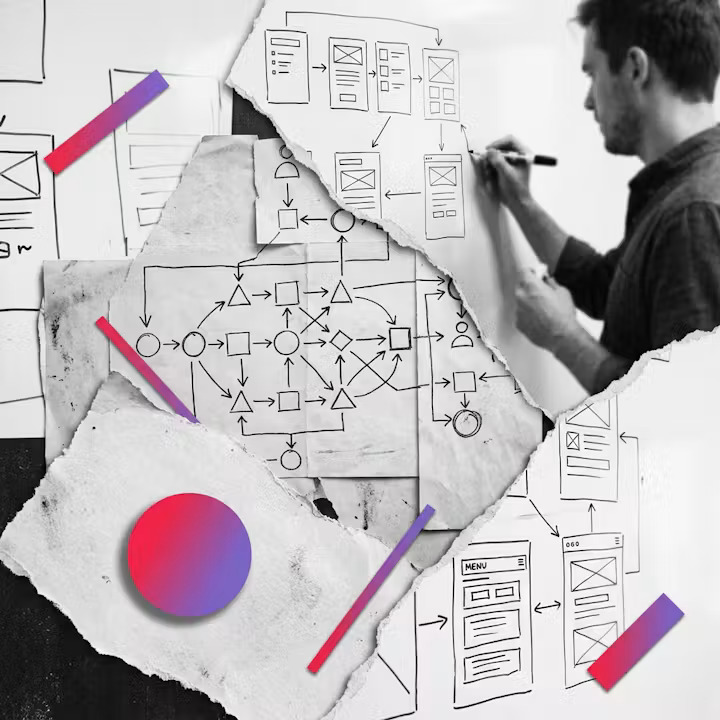
Services:
- User Research & Audience Analysis
- Personas & User Journeys
- Customer Journey Mapping
- Prototyping & Wireframing
- Usability Testing
- Design Thinking Workshops
A strong UX strategy determines whether users stay or leave.
Product- and technology-centered development that ignores the user rarely succeeds, because it misses what the audience actually needs. The VUCX UX Consulting Team guides you through a structured approach, from initial user research to a tested prototype.
From User Need to Digital Solution
Every UX strategy starts with one question: what do your users actually want to achieve? VUCX answers it through user research, personas, and user journeys, before a single concept line is written. For the brand positioning behind it, our UX team works closely with the Brand Strategy Consulting team.
The Moment of Truth: Three Phases That Decide Customer Loyalty
Whether a customer stays loyal to a brand is decided before the purchase, during the purchase, and after it. VUCX analyzes all three phases and translates them into concrete measures for your digital touchpoints. Understanding these moments means designing experiences, not just features.
The UX Strategy Development Process
The process follows four steps: user research, developing personas and user journeys, building prototypes and wireframes, and running usability tests. For companies rethinking their entire digital direction, UX strategy is often part of a larger Digital Transformation Consulting engagement.
Terms Worth Knowing
You'll encounter recurring terms throughout the project. A user goal describes what your audience wants to accomplish, while a user need describes the underlying requirements and expectations behind it. The user journey maps every step a user takes toward that goal. Building on this, prototypes emerge: simple, often interactive models that let you test assumptions early, before budget flows in the wrong direction. The overall approach is known as user-centered design: user research, prototyping, and usability testing connected into one continuous process.
To see this in practice, take a look at the Maxxis Europe case, where VUCX aligned UX concept and brand strategy closely from the start.

Strategy, Consulting
FAQs about UX Strategy
How does UX strategy development work at VUCX?
The process starts with user research and the development of personas and user journeys. Prototypes and wireframes follow, tested through usability testing. Design Thinking methods can complement the process when it fits the project.
What does developing a UX strategy cost?
Cost depends on the scope of user research and the number of prototypes to test. For a single product or app, a UX strategy is often achievable within three to six weeks. We provide a concrete quote after a brief initial conversation.
What's the difference between UX strategy and UX/UI design?
UX strategy clarifies who the users are, what they need, and what their journey should look like. The concrete design of interfaces and interactions follows afterward in UX/UI design. Both services can be commissioned together or independently.
Which companies benefit from a UX strategy?
Any company developing or substantially reworking a digital application, website, or app. It matters most for complex audiences with varied needs, such as B2B platforms or multi-channel offerings. Existing products with high bounce rates also benefit from a retroactive UX analysis.
Does VUCX also handle implementation after the UX strategy phase?
Yes, our UX/UI design, web design, and development teams take over the concrete implementation afterward. This keeps the logic derived from the strategy intact throughout the entire process. We also support user testing and fine-tuning after launch.
What methods does VUCX use for user research?
Depending on the project, we use qualitative interviews, user observation, surveys, and usability testing. The selection depends on the audience, budget, and project phase. The goal is always solid findings, not assumptions, as the basis for decisions.